
Key Stuck in a Door Lock: Safe Ways to Get It Out
A key stuck in a door lock usually comes free when you stop forcing it, return it to the correct position, and ease it out gently. If it bends, breaks, or remains trapped, stop and call a locksmith before the cylinder is damaged.
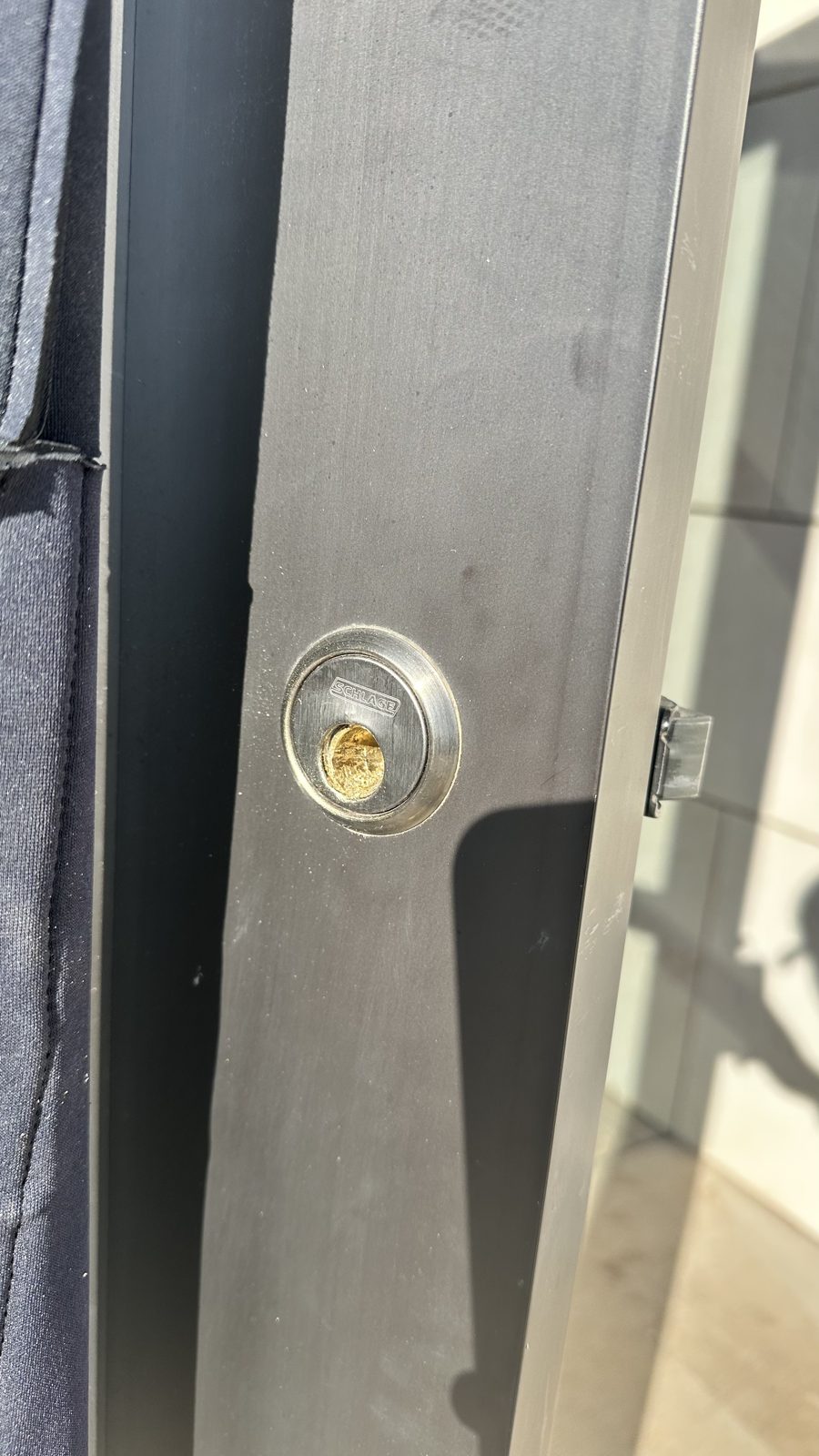
Why a key gets stuck in a door lock
A key can become trapped because it is not fully returned to the position where it can be removed. Many cylinders release the key only when the keyway is upright or at a specific neutral position. If the key is turned even slightly, it may not slide out.
The door itself can also put pressure on the lock. A door that is pressed tightly against its frame, or a latch or deadbolt that is under pressure, can make the key feel jammed. A worn or bent key, dirt inside the keyway, or a cylinder that is wearing out can also make removal difficult.
Notice what happens without forcing anything. Does the key turn normally but refuse to come out, or does it stop partway through a turn? Does it move when you gently push or pull the door? Those details help you choose a safe next step and explain the issue if you call for help.
Check these signs before trying to free it
- The key is intact and straight — If the key looks whole and has no visible bend, you can try the gentle alignment steps below. If it is bent, cracked, or starting to split, stop handling it; extra pressure can snap it inside the cylinder.
- The key turns, but will not pull out — The cylinder may need the key returned to its removal position. Use only a light touch to find that position. If turning the key causes resistance or scraping, do not keep rotating it.
- The door seems to be pushing against the lock — A tight door can load the latch or deadbolt. If you can safely reach the door handle, gently take pressure off the door while you test the key. Do not push hard or use the key as a lever.
- Part of the key has broken off — Do not insert another key or try to dig out the fragment with a sharp tool. A piece lodged inside can be pushed farther into the cylinder. Skip to the broken-key guidance below and arrange professional help.
- You are not authorized to use the lock — Only try these steps on a lock you own or are authorized to use. If you do not have permission, do not manipulate the lock or attempt to remove its key; contact the owner or property manager.
How to safely remove a key stuck in a door lock
- Stop applying force — Take your hand off the key for a moment and check whether it is straight and intact. If the key is bending, the bow is separating from the blade, or the cylinder is moving with it, stop; those are signs that more force could break the key or damage the lock.
- Support the key by its bow — The bow is the wider part you hold. Grip it with your fingers rather than pulling on the narrow blade or using a tool for extra leverage. Check that the key stays straight as you handle it.
- Look at the keyway position — Use a flashlight to see whether the key is turned away from its normal removal position. If it is, move it only a small amount toward the position where it entered. Check whether it reaches a natural stop without scraping or binding.
- Relieve pressure on the door — If you can safely reach the handle, gently pull or push the door in the direction that takes pressure off the latch or deadbolt. While holding that light pressure, see whether the key moves more freely. Stop if the door shifts sharply or the key becomes harder to move.
- Try a small, straight pull — With the key in its removal position, pull the bow straight out with a steady, gentle motion. Do not twist while pulling, rock the key from side to side, or use pliers to increase force. Check whether the key is coming out evenly.
- Pause if the key catches — If the key moves only partway and catches, ease off rather than tugging harder. You can let the handle and door rest, then try one gentle alignment adjustment. If it catches again or you hear scraping, stop and leave the key in place.
- Inspect the key after removal — Once it is out, check the blade for a bend, crack, missing piece, or unusually worn edge. Do not put a damaged key back into the lock. If the key looks sound, try it only when the lock is not under door pressure, and stop if it sticks again.
- Check the lock and door — With the key removed, look for obvious damage around the keyway and check whether the door closes and latches normally. Do not take apart the cylinder to investigate. If the key remains trapped, the lock feels loose, or the problem returns, arrange service before relying on the lock.
Choose the next step that fits your situation
Key is intact and releases with light pressure
After removing it, inspect the key and test the lock gently with the door open if that is safe and practical. If the key works smoothly and the door hardware moves normally, monitor the lock. Do not keep using a key that is visibly damaged.
Door pressure seems to be the cause
If easing pressure on the door lets the key move, the lock may be reacting to the position of the door, latch, or deadbolt. Avoid forcing the key. If the problem happens repeatedly, have the lock and door checked rather than treating each jam as a one-time event.
Key is bent, broken, or stuck firmly
Stop trying to pull it out yourself. A locksmith can assess the key and cylinder and perform broken key extraction service when a fragment or damaged key is lodged in the lock.
The key comes out, but the lock still binds
A key that sticks repeatedly can point to wear or a problem with the cylinder or door alignment. Avoid forcing it or repeatedly testing it with a damaged key. Get the lock assessed before it leaves you unable to secure or open the door.
What to do if the key breaks or stays trapped
If a key breaks, leave any visible fragment where it is. Do not push another key into the keyway, scrape at the fragment with a pin or knife, or put glue on the broken piece. Those attempts can push the fragment deeper, leave material inside the cylinder, or damage the lock’s internal parts.
If the door is locked and you cannot secure or enter your own property, do not try to defeat the lock. Call a locksmith and explain whether the key is intact, broken, or turned in the cylinder. Mention whether the lock is on a house door or another entrance so the locksmith understands the situation.
If you can still operate the door safely, avoid using the affected lock until it has been checked. A key that has snapped once may be weakened, and a cylinder that holds a key may be difficult to operate again. Keep the broken pieces together if you have them; they can help show whether the key is complete.
Avoid these mistakes while the key is stuck
- Do not twist harder — A key is not a handle or a pry bar. More torque can bend or break it, especially when the cylinder is binding.
- Do not yank with pliers — Pliers can crush the key bow or pull at an angle, putting extra strain on the blade and cylinder. If a light pull by hand does not work, stop.
- Do not poke into the keyway — Pins, needles, knives, and improvised tools can scratch or jam parts inside the cylinder. Do not use them to probe around a trapped key.
- Do not flood the lock with household products — Cooking oil, glue, and general-purpose sprays can leave residue or create a different problem. Avoid adding a product unless its label specifically says it is suitable for the lock and you know how to use it.
- Do not dismantle a lock you cannot secure — Taking hardware apart can leave a door unsecured or make the key harder to remove. If the key is trapped and the door matters for your home’s security, call a locksmith instead.
What a locksmith can check when a key will not come out
A locksmith can examine the key’s position, the cylinder, and the way the door hardware moves without relying on forceful pulling. If the key is broken or lodged, the locksmith can determine whether extraction is appropriate and check the lock afterward. If the key comes out but the problem repeats, describe when it sticks and whether moving the door changes anything.
When you call, share whether the door is locked, whether the key turns, and whether any part of it has broken off. Tell the locksmith if you have already tried a gentle alignment or relieved pressure on the door. Clear details help identify the issue before service begins.
Locksmith Xpress is a mobile locksmith based in Gaithersburg and serves all of Montgomery County. The team drives to your home, car, or business, and there is no storefront to visit. You can learn about our locksmith in Gaithersburg services and the areas we serve.
Get help with a stuck door key in Gaithersburg
If gentle steps do not release the key, it is bent, or you see a broken fragment, stop before the lock or key takes more damage. Locksmith Xpress is open Monday to Sunday, 8:00 AM to 8:00 PM, and is a licensed locksmith in Maryland, License #733 (State of Maryland).
Call (301) 806-1626 or use our contact page to arrange mobile locksmith service. Share what the key is doing and where the lock is located so we can understand the problem.
Frequently asked questions
Should I turn the key before pulling it out?
Only move it gently toward the position where it entered the lock. Many cylinders release a key only at a particular position, but forcing a turn can bend or break the key. Stop if it binds or scrapes.
Can I use pliers to remove a key stuck in a door lock?
Avoid pliers because they can pull the key at an angle or put too much force on the blade. Try a gentle straight pull by the bow only if the key is intact and aligned. If it does not move easily, stop and call a locksmith.
What should I do if part of the key breaks off inside the lock?
Do not push another key into the cylinder or probe the keyway with a sharp tool. Leave the fragment in place and contact a locksmith for help with removal. Tell them whether the door is locked and whether any piece of the key is visible.
Why does my key keep getting stuck even after I remove it?
Repeated sticking can come from a worn or damaged key, a binding cylinder, or pressure from the door or its latch. Do not keep forcing the key or rely on a key that is bent or cracked. Have the lock checked if the problem returns.
Need help with a stuck key?
Call Locksmith Xpress at (301) 806-1626 for mobile locksmith service in Gaithersburg and Montgomery County.