
How to Copy a Car Key
How to copy a car key depends on the key type: a basic metal key can be cut from a working original, while a key with a chip or remote may also need programming. Identify the type first, then have the duplicate cut and tested for your car.
How to Copy a Car Key: Choose the Right Method
Start by deciding whether you need a spare of a key that still works or a replacement because the original is missing or damaged. Copying an existing key is usually more straightforward because the original can be examined and used as a pattern. If you have no working key, tell the locksmith that before arranging the work; making a replacement without an original is a different job.
Next, consider what the key does. A plain metal key only turns the lock or ignition, while many newer keys also communicate with the vehicle electronically. A duplicate that looks right but lacks a required chip or remote function may not start the car or operate its remote features.
Basic metal key
A key with no buttons or visible electronics may need a correctly shaped metal duplicate. The copy must match the original cuts and turn smoothly in the locks and ignition.
Transponder key
This type has an electronic chip that the vehicle must recognize. The metal blade can be cut, but the duplicate may also require programming before it can start the car.
Remote, key fob, or smart key
These keys may unlock doors remotely, start the vehicle, or support keyless functions. A copy may involve cutting, programming, or both, depending on the vehicle and key design.
Identify the Key Type Before You Make a Copy
Look at the key you use now and note its functions, but do not rely on appearance alone. Some keys with a metal blade also contain a chip, and a remote that is separate from the blade may still be part of the starting system. Your vehicle’s owner’s manual can help you understand its key features.
Gather the original key, the vehicle, and any information you have about the problem. You do not need to take apart the key or car. Avoid sharing key codes or vehicle security information in public; provide relevant details directly to the locksmith handling the work.
- Check for buttons or a separate remote — Note whether the key locks and unlocks the doors, opens a trunk, or has remote-start buttons. These functions may need to be checked separately from the metal blade.
- Notice how the car starts — Does the key turn in the ignition, or do you start the vehicle with a push button? This helps distinguish a conventional blade from a key fob or smart key setup.
- Check the condition of the original — Look for a bent blade, deep wear, a loose shell, or buttons that do not respond. If the key is damaged, tell the locksmith rather than treating it as a reliable pattern.
- Confirm whether you have a working key — A working original can usually be tested against the duplicate. If every key is lost or none will start the car, explain that clearly because the next steps differ from copying a spare.
- Decide which functions the spare must perform — Make a short list: unlock doors, open the trunk, turn the ignition, start the car, or use remote and keyless features. Test each function you expect the duplicate to provide.
How the Car Key Copying Process Works
For a straightforward duplicate, the process is a sequence of identification, cutting, and testing. Electronic keys add a programming check. Keep the vehicle and the working original available so the finished key can be assessed in the conditions where you will use it.
- Confirm the key is yours and identify the vehicle — Have the vehicle and the key available, and explain that you want a duplicate. This keeps the work tied to your own car and gives the locksmith context to identify the right key type.
- Inspect the original key — Check the blade for bends, rounded cuts, cracks, or heavy wear, and check the shell and buttons if present. A badly worn key may not provide a dependable pattern, so mention any trouble you have had using it.
- Confirm the duplicate’s intended functions — Say whether the spare needs to open the doors, turn the ignition, start the engine, or operate remote features. After this check, you and the locksmith should have a clear list of what the copy needs to do.
- Match the blank key — The blank must have a compatible shape and keyway for the original and the vehicle. Do not try to force a blank that looks close; confirm that it fits the keyway before cutting begins.
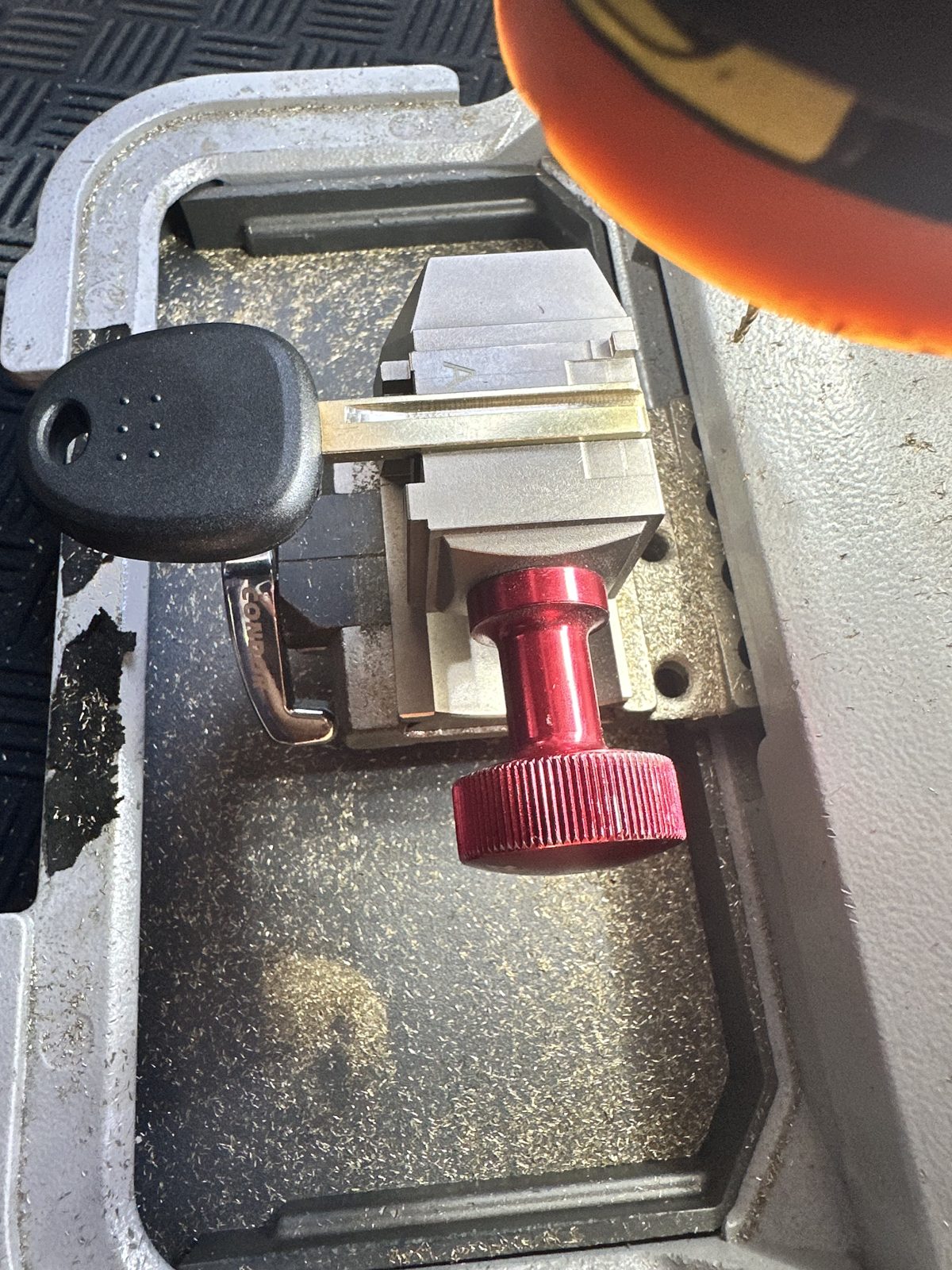
- Cut the metal blade — A key-cutting machine traces or measures the original’s pattern and cuts matching grooves into the blank. Locksmith Xpress has an Xhorse key cutting machine in the service van, so this work can be done on site; inspect the new blade for clean, complete cuts.
- Program the electronic part if needed — A transponder key, key fob, or smart key may need to be paired with the vehicle. Programming is done at the customer’s car; confirm that the vehicle recognizes the new key rather than assuming a cut blade is ready to start it.
- Test the key in the vehicle — With the car parked safely, test the duplicate in the door and ignition if the vehicle uses them. Check starting, lock and unlock buttons, and other functions you requested, one at a time.
- Keep the original separate and try the spare again — Once the copy works, store it somewhere separate from your everyday key. Test it again before you need it in a hurry, and get help if the duplicate sticks, turns roughly, or fails to start the car.
Which Car Key Copying Option Fits Your Situation?
The right option depends on whether your original works, what functions the spare needs, and whether the key has electronics. A simple duplicate is not a substitute for a complete replacement when the original is lost, badly damaged, or no longer recognized by the vehicle.
You have a working metal key and need a spare
Ask for a duplicate cut from the working original, then test it in the locks and ignition. This is a practical option when the current key works normally and has no electronic functions to reproduce.
You have a working chip key or remote key
Ask whether the duplicate needs cutting, programming, or both. Keep the car available so the electronic functions can be checked at the vehicle.
Your only key is worn or damaged
Do not assume a copy of a worn key will correct the problem. Explain what happens when you use it; the locksmith can assess whether duplication is appropriate or whether you need a replacement instead.
You have no working key
Ask about replacement rather than ordinary duplication. Without a working original, the process is different, and the vehicle may need to be present for key cutting and programming.
What Can Go Wrong With a Car Key Duplicate?
A duplicate can look almost identical to the original and still fail. The blade may be cut inaccurately, the original may be worn, or an electronic part may not be programmed or recognized. Test the copy before putting it away as an emergency spare.
Use the symptoms to decide what to do next. Avoid repeatedly forcing a key that binds or will not turn; that can make a small issue harder to diagnose. Stop and ask a locksmith to check the key and the vehicle if normal use does not work.
- The key will not enter the lock or ignition — Check that you are using the intended duplicate and that it is aligned correctly. If it still will not enter smoothly, stop; do not push or twist it by force.
- The key enters but will not turn smoothly — A cut that does not match, a worn original, or a problem with the lock or ignition can cause binding. Compare how the original works and have the new key inspected if the duplicate catches.
- The doors unlock but the car will not start — The blade may operate the door while the vehicle does not recognize the electronic chip. Ask for the key’s programming and starting function to be checked at the car.
- The car starts, but the remote buttons do not work — Starting and remote functions are not always the same feature. Test each requested button and ask the locksmith to check the remote function if it fails.
- The key works once but is unreliable — Do not treat an intermittent key as a dependable spare. Note which function fails and when, then have the key checked before you rely on it.
When to Call a Locksmith Instead of Copying It Yourself
Call a locksmith when you are unsure whether the key contains a chip, need the electronic part programmed, have no working original, or find that a new copy binds or fails to start the car. A locksmith can assess the key type and test the result with the vehicle. Do not try to open, bypass, or defeat a lock or car that you do not own or have permission to access.
For help with a spare or a key that needs cutting and programming, see our car key duplication service. Locksmith Xpress is a mobile locksmith based in Gaithersburg and serves Montgomery County. The key cutting machine is in the service van, and key fobs, smart keys, and transponder keys are programmed at the customer’s car.
Test the Duplicate and Store It Safely
Test the copy while you still have the original and can get help if something is wrong. Park in a safe place, keep the original with you, and check each function the duplicate is meant to handle. For a traditional key, verify that it enters and turns the locks and ignition smoothly; for an electronic key, check starting and any requested remote features.
Avoid judging a spare by appearance or by one successful button press. A remote may unlock the doors even when the key does not start the car, and a metal blade may turn a lock without operating the vehicle’s electronic system. If a function fails, note exactly what happened and arrange a check before relying on that key.
Once all the expected functions work, keep the spare somewhere secure and separate from your everyday key. Do not leave it inside the car or in an obvious spot near the vehicle. Make sure anyone who may need the spare knows where it is and which functions it can perform.
On-Site Car Key Duplication in Gaithersburg
You do not need to bring your car to a storefront for Locksmith Xpress’s mobile service. We drive to your home, car, or business, and the Xhorse key cutting machine is in the service van so key cutting can be done on site. Key fobs, smart keys, and transponder keys are programmed at your car.
Locksmith Xpress serves Gaithersburg and all of Montgomery County, including Rockville, Silver Spring, Germantown, and Bethesda. We are open Monday to Sunday, 8:00 AM to 8:00 PM. To arrange help, use contact us, or learn more about our locksmith in Gaithersburg service.
Frequently asked questions
Can a car key be copied if I only have one working key?
Often, a working key can be used as the pattern for a duplicate, but the right process depends on the key and vehicle. If it has a chip, fob, or smart-key function, the electronic part may also need programming and testing at the car.
Do I need to bring my car in to copy a transponder key?
For Locksmith Xpress service, transponder keys are programmed at the customer’s car. We are a mobile locksmith, so we drive to your vehicle rather than asking you to visit a storefront.
What should I do if my only car key is broken?
Do not assume that copying the broken key will make a reliable spare, especially if the blade is bent or worn. Explain what is damaged and whether any working key remains so the locksmith can determine whether duplication or replacement is the appropriate service.
How can I tell whether a copied key is ready to use?
Test every function the duplicate is meant to perform, including turning the lock or ignition, starting the car, and using remote buttons. If it binds, fails to start the vehicle, or misses a requested function, have it checked before relying on it.
Need a Car Key Duplicate?
Contact Locksmith Xpress to arrange mobile car key duplication in Gaithersburg or Montgomery County.