
How to Lubricate a Door Lock
If you’re wondering how to lubricate a door lock, use a small amount of lubricant made for locks and follow the product label. If the key still catches or the latch sticks after cleaning and testing, stop and arrange repair instead of adding more product.
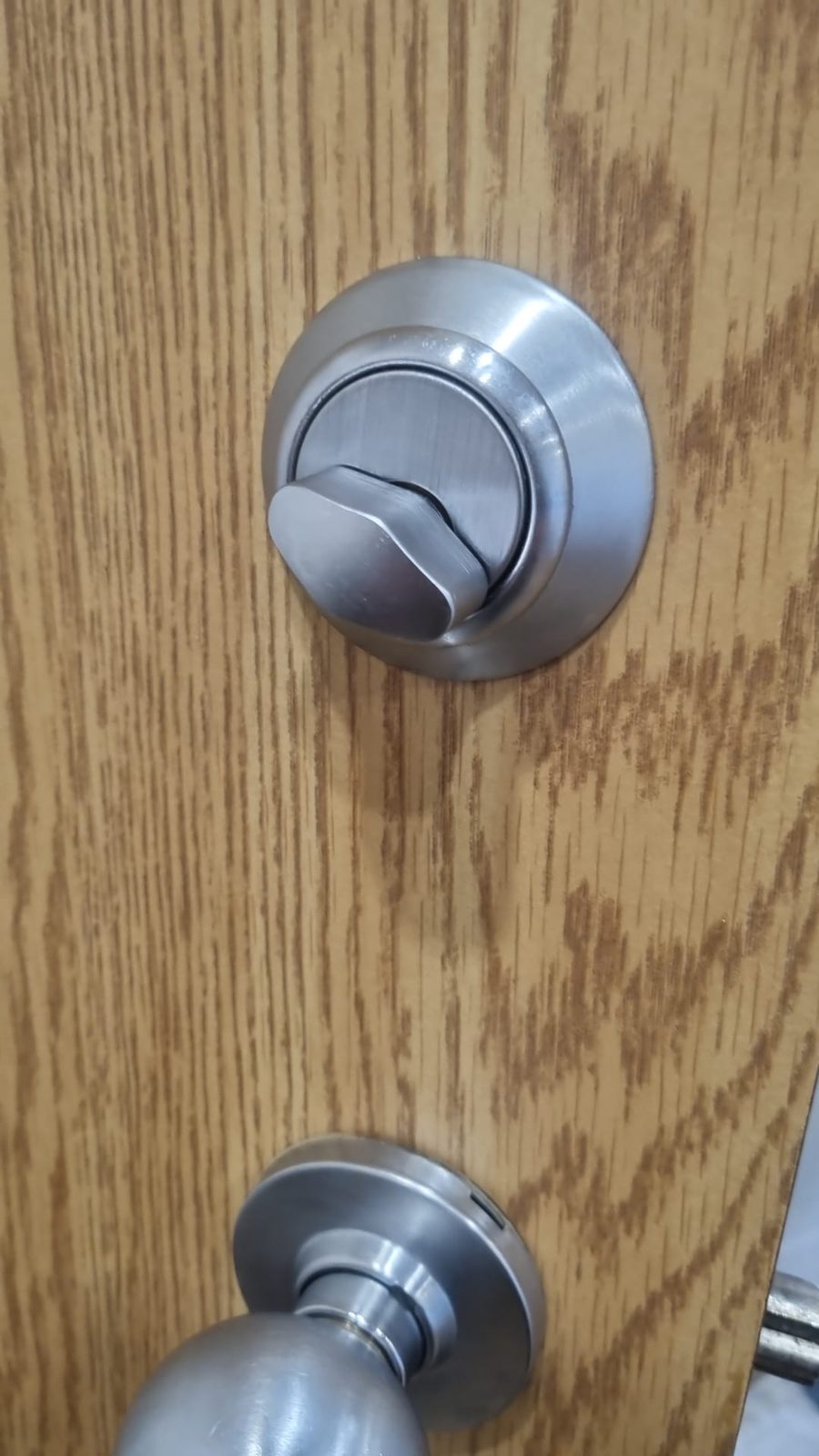
When Lubricating a Door Lock Can Help
A small amount of lock-specific lubricant may help when a key enters or turns with slight resistance, or when a latch moves less smoothly than it used to. Dust and everyday use can affect how moving parts feel. Lubrication is a maintenance step, not a fix for every lock problem.
First notice where the trouble occurs. If the key sticks as it enters or turns, the keyway may need attention. If the key turns but the latch does not move freely, the issue may be with the latch or how the door meets its frame. Those are different problems, so spraying the keyway repeatedly may not help.
If the lock suddenly becomes hard to use, the key is bent or damaged, or the hardware feels loose, do not force it. Forcing the key can leave it stuck or broken in the lock. A professional can inspect the cause through a lock repair service when basic owner-level checks do not resolve it.
What You Need Before You Start
Gather a few simple items before working on a lock you own or are authorized to maintain. Read the lubricant label first, and use only a product the lock manufacturer recommends or identifies as suitable for that lock.
- Lock-specific lubricant — Choose a product labeled for locks and follow its directions. A small amount is usually the right place to start; do not pour or flood lubricant into the keyway.
- The correct key — Use an undamaged key that belongs to the lock. If the key is bent, cracked, or has visibly worn edges, set it aside rather than testing it repeatedly.
- A clean cloth — Use it to wipe the key and remove any lubricant from the lock face or surrounding door. Keep the cloth away from painted surfaces until you know the product will not affect them.
- A light source — A flashlight can help you see whether the keyway or latch area has visible dirt or an obstruction. Do not poke into the keyway with pins, blades, or other tools.
- The product instructions — Check whether the lubricant is intended for the cylinder, the latch, or both. If the label or lock manufacturer gives different directions, follow those rather than a general tip.
Choose the Right Approach for the Symptom
Before applying anything, compare the symptom with the part that moves. This helps you avoid putting lubricant in the wrong place or overlooking a door alignment problem.
Key feels rough in the keyway
If the correct key enters but feels gritty or resists turning, check the key for dirt or damage. If it is clean and intact, use lock-specific lubricant in the keyway according to the label, then test gently.
Latch feels stiff with the door open
If the latch itself does not move smoothly when you operate the handle with the door open, the trouble may be in the latch mechanism. Use lubricant on that part only if the product instructions allow it; otherwise, arrange an inspection.
Door closes poorly but lock works open
If the key and latch work when the door is open but bind when it is shut, the door or strike plate may be out of alignment. Lubricating the cylinder is unlikely to correct that difference.
Key will not turn, or hardware is loose
Do not force the key or continue spraying. A damaged key, internal wear, loose hardware, or a problem beyond routine maintenance may need repair by a locksmith.
How to Lubricate a Door Lock: Step by Step
Work slowly and test one part at a time. These steps are for a lock you own or have permission to maintain; they are not instructions for opening or defeating a lock.
- Identify the part that is sticking — Check whether the keyway, latch, handle, or door alignment seems to cause the resistance. Operate the lock gently and note what happens; do not keep turning a key that binds.
- Inspect the key — Look for a bend, crack, heavy dirt, or worn edges. Wipe off ordinary surface grime with a clean cloth and try only a sound key that belongs to the lock.
- Check the lock face and latch — Use a flashlight to look for visible debris around the keyway and latch. Remove loose surface dust with a dry cloth, but do not insert sharp objects or force anything into the mechanism.
- Read the lubricant label — Confirm that the product is intended for the type of lock part you are treating. Check its application directions and any cautions from the lock manufacturer before using it.
- Apply a small amount to the keyway — If the directions permit, apply a small amount of lock-specific lubricant at the keyway. Avoid flooding the opening or spraying nearby surfaces; check that the product has gone only where intended.
- Insert and remove the key gently — Put the correct key into the keyway and draw it out without twisting it hard. Repeat gently as the product label directs, then check whether the key moves more freely.
- Turn the key with the door open — With the door open, test the key and operate the lock through its normal movement. Check that the bolt or latch moves fully and that the key can be removed without catching.
- Test the door closed and wipe the area — Close the door and test the lock without forcing it. If it works open but binds closed, note that difference and stop adding lubricant; wipe away residue and arrange help if needed.
What Can Go Wrong When You Lubricate a Lock
Using the wrong product or too much of it can leave residue inside the lock or attract dirt. Avoid household cooking oils, thick grease, and products that are not labeled for the part you are treating. Do not assume a general-purpose spray is suitable for every lock; check its label and the manufacturer’s guidance.
Do not mix products in the same keyway. If you have already used something and the lock now feels worse, stop applying more. Wipe the exposed area, keep the key clean, and ask a locksmith to inspect it rather than trying to flush the mechanism with another product.
Never force a stiff key, twist it with pliers, or pry at the lock. These actions can damage the key or lock and may turn a minor problem into a repair. If a key breaks in the cylinder, do not push the broken piece farther inside; get help from a locksmith.
When Lubrication Is Not the Right Fix
A lock that remains stiff after one careful, label-directed application may have a problem that lubricant cannot solve. The cylinder could be worn, a key could be damaged, or debris could be lodged where you cannot safely reach it. More lubricant is not a substitute for finding the cause.
Test the lock with the door open and then closed. If it operates smoothly while open but binds when closed, the door may be pressing against the latch or strike plate. If the latch still sticks with the door open, or the handle feels loose, stop using force and have the hardware checked.
Call a locksmith if the key will not turn, the lock repeatedly jams, the latch fails to retract, or you cannot secure the door. Do not try to open, bypass, or defeat a lock that you do not own or have permission to service. For a persistent problem, contact our lock repair service to discuss the lock and what it is doing.
Keep the Lock Working After Lubrication
After testing, wipe lubricant from the key and the visible lock face. Store the product and key safely, and keep the manufacturer’s care instructions for future reference. Avoid putting household cleaners or other substances into the keyway unless the manufacturer says to do so.
Pay attention to changes rather than applying lubricant on an arbitrary schedule. If the lock becomes rough again soon after treatment, or the key works only when held at a certain angle, arrange an inspection. A repeated symptom can point to a worn or misaligned part that needs more than routine care.
Locksmith Xpress is a mobile locksmith based in Gaithersburg and serves Montgomery County. We come to your home, car, or business; there is no storefront to visit. Find a locksmith in Gaithersburg or contact us about a lock that still sticks after these checks.
Frequently asked questions
Can I use WD-40 to lubricate a door lock?
Check the product label and the lock manufacturer’s instructions before applying any spray. Use a product specifically identified as suitable for the lock, and do not add another product if the lock feels worse after treatment.
Should I lubricate the keyway or the latch?
It depends on which part is sticking and what the product instructions permit. If the key feels rough in the cylinder, address the keyway; if the latch sticks even with the door open, the latch mechanism may need attention.
How often should I lubricate a door lock?
There is no single interval that fits every lock, so follow the manufacturer’s care instructions. If the lock starts to feel rough, inspect it first and use only a suitable product as directed rather than applying lubricant repeatedly.
What should I do if the lock still sticks after lubrication?
Stop applying lubricant and do not force the key. Compare how the lock works with the door open and closed, then contact a locksmith if it still binds, jams, or will not secure the door.
A Lock Still Sticking?
Contact Locksmith Xpress to arrange mobile lock repair in Gaithersburg or elsewhere in Montgomery County.