
Why Is My Car Key Stuck in the Ignition
Why is my car key stuck in the ignition? Common causes include pressure on the steering wheel, a shifter that is not fully in Park, or a worn key or ignition cylinder. Try the safe checks below, but do not force the key.
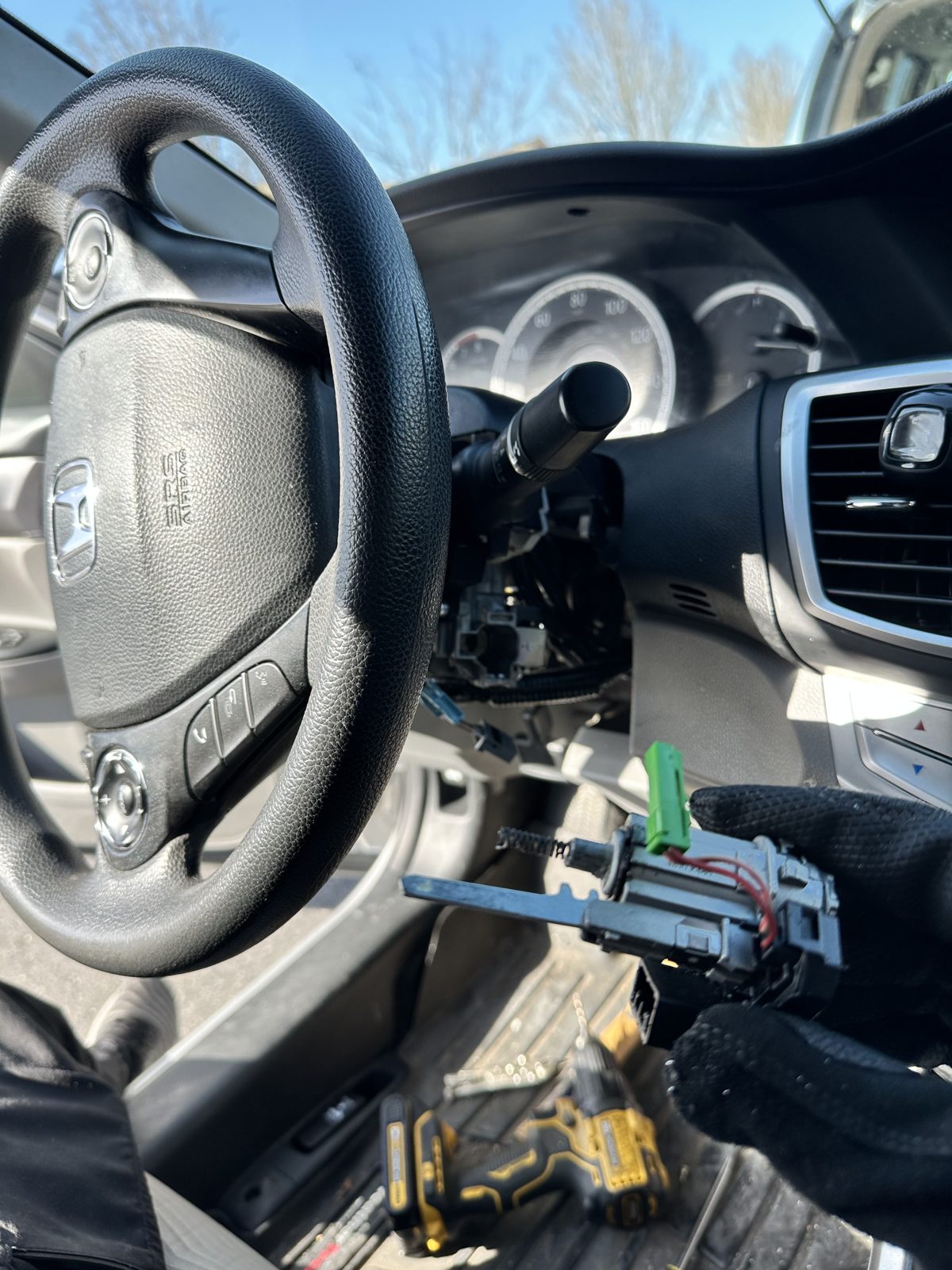
Why a Key Can Get Stuck in the Ignition
A key usually stays trapped because the vehicle has not reached the position that releases it, or because something is binding in the key-and-ignition mechanism. The cause may be simple, such as tension on the steering wheel or an automatic shifter that is not fully in Park. A worn key or damaged ignition cylinder can also make the key difficult to turn or remove.
In many vehicles, the steering wheel lock can press against the ignition when the front wheels are turned or the wheel is held under pressure. That tension may make the key feel stuck even though the key itself is usable. The key can also be harder to remove if it has not returned all the way to the correct off or lock position.
Separate the symptom from the cause. A key that will not come out may point to a release or position issue; a key that will not turn may point to steering-wheel pressure, a worn key, or a problem inside the ignition cylinder. If the key is bent, cracked, or visibly worn, stop using it rather than risking a break inside the ignition.
- Steering wheel pressure — The key feels caught while the steering wheel is pulled hard to one side. With the vehicle safely stopped, gentle movement of the wheel may relieve pressure. Do not yank the wheel or force the key.
- Shifter not fully in Park — On many automatic vehicles, the key release depends on the shifter reaching Park. A shifter that appears to be in Park but is not fully seated can keep the key from releasing.
- Worn or damaged key — A key with worn edges, a bend, or a crack may not move smoothly in the cylinder. Compare it with a spare if you have one, but do not insert a damaged key again and again.
- Ignition cylinder or release issue — If the key remains stuck after the basic checks, or the key will not turn smoothly, the cylinder or a related release mechanism may need professional attention. Repeated force can make the damage worse.
Try These Safe Checks in Order
- Make the vehicle safe — Stop in a safe place, set the parking brake, and keep your foot on the brake if needed. Check that the vehicle is stable before working with the key. If you are in an unsafe location, focus on getting help rather than troubleshooting.
- Check the shifter position — If the vehicle has an automatic transmission, press the brake and move the shifter firmly into Park. Check the position indicator if the vehicle has one. Try removing the key only after the shifter is fully seated.
- Relieve steering-wheel pressure — Hold the key gently and move the steering wheel a small amount in the direction that has room to move. At the same time, try a light turn of the key. Stop if either part resists; the goal is to release pressure, not to overpower the lock.
- Return the key to its release position — If the key turns, move it gently to the off or lock position indicated by the vehicle. Check whether it can then be removed without pulling hard. Do not twist past a stop or use pliers for extra leverage.
- Look over the key — Once it is out, check for a bend, crack, heavy wear, or a loose key head. Compare it with a spare if one is available. If the spare works smoothly where the first key does not, avoid relying on the damaged key.
- Try a known-good spare once — Use a spare key only if it is made for the vehicle and looks undamaged. Insert it gently and see whether it turns and releases normally. If it also binds, stop testing; the ignition or release mechanism may be the issue.
- Remove extra keychain weight — If the key is on a heavy keychain, remove the extra items before trying it again. Check whether the key now moves more freely. This is a simple check, not a repair for a cylinder that already sticks.
- Stop if the key still binds — Do not keep turning, pulling, or inserting different objects around the ignition. Check that the key is not left in a position that prevents the vehicle from being secured, then arrange professional help if it remains stuck.
What Not to Do When the Key Is Stuck
- Do not force the key — A key can snap when it is twisted or pulled against resistance. If gentle movement does not work, stop and leave the key where it is.
- Do not use pliers or a screwdriver — Tools add leverage and can bend the key, damage the ignition opening, or break a key that is already weakened. They do not address the cause of the binding.
- Do not put random lubricant into the ignition — Household oils and sprays may leave residue or create a new problem inside the mechanism. Use only a product and method recommended for that vehicle and ignition; when you are unsure, ask a professional.
- Do not keep cycling the key — Repeatedly turning a key that catches can worsen wear in the key or cylinder. One careful attempt after checking the shifter and steering wheel is enough to tell you whether the easy checks helped.
- Do not take apart the steering column — Removing covers or working on ignition wiring can damage components and may create a safety issue. Leave internal disassembly and repair to a qualified professional.
Which Fix Fits the Symptoms?
The right next step depends on whether the problem follows the key or stays with the ignition. These clues can help you explain the issue clearly when you arrange service, but they do not replace an inspection.
A spare key works normally
If one key sticks and an undamaged spare turns smoothly, the first key may be worn or damaged. Avoid using the troublesome key again. A car key replacement service may be the relevant next step when you need a working key made for your vehicle.
Both keys bind in the same way
If more than one usable key catches in the ignition, the issue may be in the ignition cylinder or a related release mechanism rather than in one key. A locksmith or automotive professional can assess whether the ignition needs repair.
The key turns but will not come out
Recheck the shifter position and whether the key has reached the vehicle’s off or lock position. If those checks do not release it, avoid pulling hard; the key-release mechanism may need attention.
The key is visibly damaged or partly broken
Stop inserting or twisting it. If part of the key has broken off, do not push it farther into the ignition or try to fish it out with a tool. Arrange professional help before the fragment moves deeper or causes additional damage.
If Your Car Key Won’t Turn in the Ignition
A key that will not turn is not automatically a failed ignition switch. The key has to fit and move the ignition cylinder; the ignition switch is a separate electrical part that responds when the key turns. A problem with steering-wheel pressure, the key itself, or the cylinder can all prevent normal movement, so replacing an electrical switch without identifying the source may not solve the symptom.
Try only the low-risk checks: confirm the vehicle is stopped, check Park if it has an automatic shifter, and gently relieve pressure on the steering wheel while applying light pressure to the key. If the key remains locked or the cylinder feels rough, stop. Do not try to start the vehicle by bypassing the ignition or working on wiring.
If the key turns but the engine does not respond as expected, that is a different symptom from a key physically stuck in the cylinder. Share exactly what happens: whether the key turns, whether it comes out, and whether the issue happens with a spare. Those details help a professional choose what to inspect.
When to Call a Locksmith
Call a locksmith when gentle checks do not release the key, the key is bent or cracked, more than one key binds, or the ignition feels rough or catches repeatedly. A key that has broken in the ignition also needs professional attention. Stop troubleshooting rather than risking damage to the key or ignition.
Tell the locksmith whether the vehicle is in Park, whether the steering wheel feels locked, whether the key turns at all, and whether you tested an undamaged spare. Mention if the key is still in the ignition or a piece has broken off. Give clear permission only for work on a vehicle you own or are authorized to use; never try to open, bypass, or defeat a lock on a vehicle that is not yours.
Locksmith Xpress is a mobile locksmith based in Gaithersburg and serves Montgomery County. We come to your car, and key cutting and key programming are done on site when those services are needed. We also offer car ignition repair. You can contact us or learn more about our car key replacement service.
How to Reduce the Chance of It Happening Again
Treat a key that catches as a warning, not as a cue to use more force. If a spare key works better, keep the damaged key out of use and arrange a replacement. If every key binds in the same way, avoid waiting for the problem to become a complete failure; have the ignition checked before you depend on it for another trip.
Keep the key separate from a heavy bunch of items when you drive, and avoid putting sideways pressure on it while it is in the ignition. When you park, bring the vehicle to a full stop, set the parking brake as appropriate, and make sure an automatic shifter is fully in Park before removing the key.
If you need a local mobile locksmith, Locksmith Xpress serves Gaithersburg and Montgomery County from Monday to Sunday, 8:00 AM to 8:00 PM. Visit our Gaithersburg locksmith page to learn about our mobile service. We come to your home, car, or business; there is no storefront to visit.
Frequently asked questions
Can I drive if the key is stuck but the car starts?
A key that cannot be removed can mean the vehicle has not reached its normal off or lock position, or that the release mechanism is not working correctly. Do not leave the vehicle unattended or force the key; arrange professional help if the basic shifter and steering-wheel checks do not release it.
Will a replacement key fix a key stuck in the ignition?
It may help if the existing key is worn or damaged and an undamaged key works normally. If multiple keys bind, the ignition cylinder or a related mechanism may be the cause, so replacing the key alone may not fix it.
Should I pull a stuck ignition key out with pliers?
No. Pliers can bend or break the key and may damage the ignition. Try only gentle checks for shifter position and steering-wheel pressure, then call a locksmith if the key remains stuck.
Can Locksmith Xpress come to my car in Gaithersburg?
Yes. Locksmith Xpress is a mobile locksmith based in Gaithersburg and serves all of Montgomery County, including service at your car. The business is open Monday to Sunday, 8:00 AM to 8:00 PM.
Need Help With a Stuck Car Key?
Call Locksmith Xpress at (301) 806-1626. We provide mobile service in Gaithersburg and throughout Montgomery County, Monday to Sunday, 8:00 AM to 8:00 PM.