
Door Lock Stuck or Key Won’t Turn? Causes and Fixes
A door lock stuck or a key that will not turn often comes down to pressure on the door, a worn key, or a problem inside the lock. Try a few gentle checks first; stop if the key binds or the lock still will not operate.
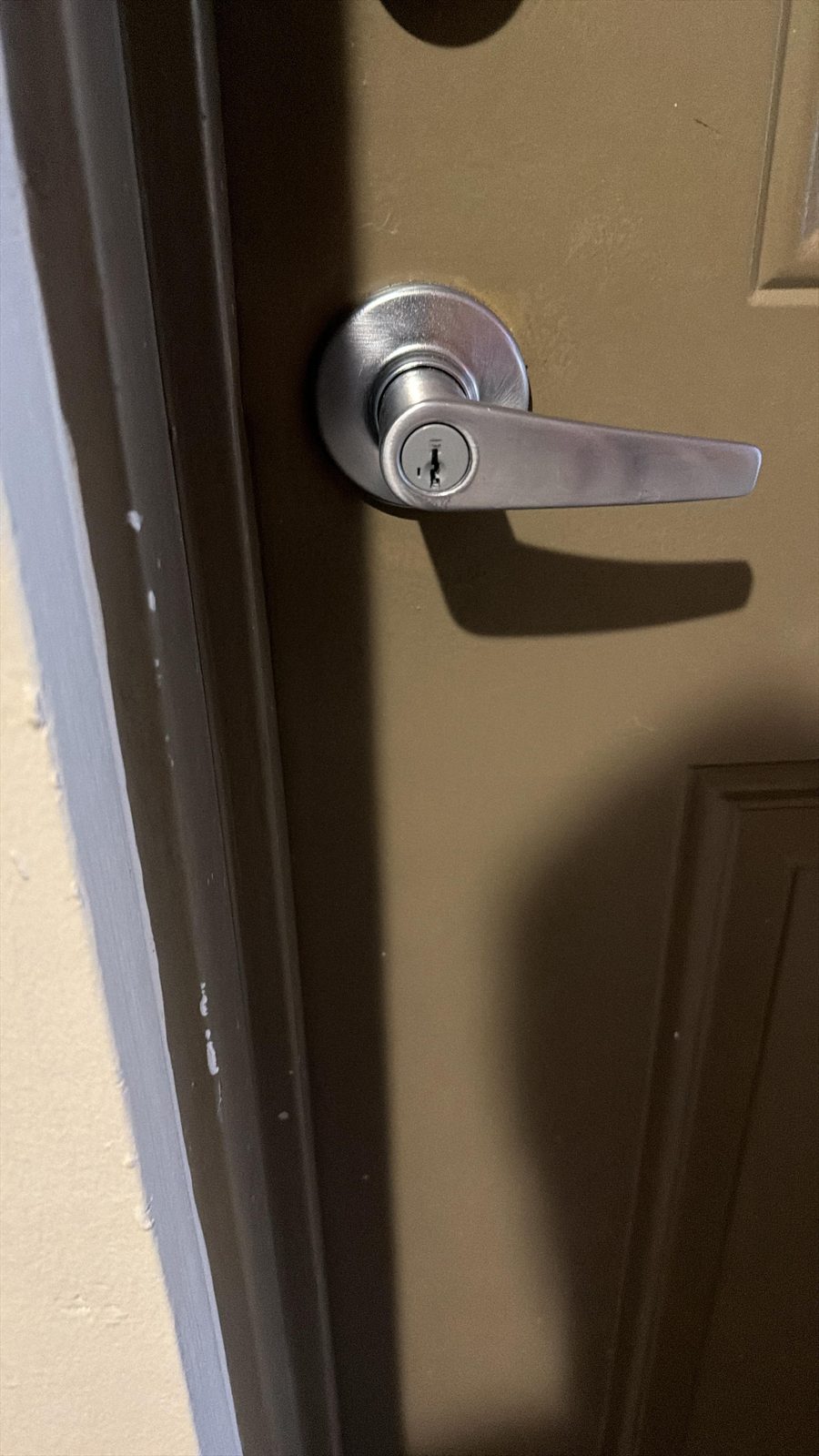
Why a Door Lock Gets Stuck
A key may stop turning because the door is pressing against the latch or deadbolt. A door that has shifted slightly, a loose strike plate, or pressure from pulling or pushing the door can keep the bolt from moving freely. If the lock works when the door is open but binds when it is closed, alignment or door pressure is a likely place to look.
The key itself can also be the problem. A bent, worn, or incorrect key may not line up with the lock’s internal parts. Compare it with a spare key if you have one, and look for visible bends, cracks, or damage. Don’t keep testing a damaged key; it could break in the cylinder.
Debris, corrosion, or worn internal parts can make the keyway or mechanism stiff. A loose knob or cylinder may also keep the lock from operating smoothly. These symptoms can overlap, so a single failed turn does not always reveal which part needs attention.
Notice when the trouble began and whether it happens with every key, only when the door is closed, or while turning the knob. Those details help narrow down whether the issue is the key, the door’s alignment, or the lock mechanism.
What to Check Before You Try a Fix
Start with visible, low-risk checks. Keep the door open while testing the lock only if you can do so without creating a risk of being locked out. Do not force the key, pry at the door, or take apart the cylinder.
- The key — Check for a bend, crack, heavy wear, or debris on the blade. If you have a spare, compare the two and try the spare gently. If it works while the first key does not, stop using the damaged key.
- The door’s position — Notice whether the key turns more easily when you gently push or pull the door. A change in how the door sits can put pressure on the latch or bolt. Do not lean hard on the door or force the lock.
- The latch and strike plate — With the door open, look at the latch or deadbolt and the metal plate on the frame. Check for loose visible screws, rubbing marks, or an obvious obstruction. Do not remove the lock to investigate.
- The knob or handle — Check whether the knob feels loose or turns without retracting the latch. If the handle or latch behaves differently with the door open, the problem may involve the hardware rather than key alignment.
- When the problem happens — Write down whether the issue occurs with one key or all keys, and whether it happens with the door open, closed, or both. A clear pattern can help identify the next safe step.
- Your access and safety — If this is your only usable entrance, avoid experiments that could leave the door secured against you. If you cannot operate the lock normally, keep the door in a safe position and arrange repair.
Safe Steps to Troubleshoot a Stuck Door Lock
Work through these checks in order and use only gentle pressure. Stop at the first sign that the key is bending, the cylinder is turning in the door, or the mechanism is getting worse.
- Keep the door from closing during testing — If you can safely access the lock from both sides, leave the door open while checking it. Make sure you have another way to secure the property before testing; do not risk locking yourself out.
- Inspect the key under good light — Use a flashlight to check the key blade for a bend, crack, or worn edges. Wipe away surface dirt with a clean cloth. If the key is damaged, set it aside and use a sound spare instead.
- Insert the key without turning it — Slide the key in gently and confirm that it seats fully. If it catches, feels unusually loose, or will not enter smoothly, pull it straight out. Do not wiggle it hard or push it deeper.
- Try a spare key once — If you have a spare that belongs to this lock, test it with light pressure. If it operates normally, the original key may be worn or damaged. If both keys bind, stop repeating the test.
- Check the door’s pressure — With the key inserted, apply only gentle pressure by pushing or pulling the door a small amount, then try a normal turn. If the key moves only when the door shifts, the latch or bolt may be under pressure from alignment.
- Test the latch with the door open — If the lock has a knob or handle, operate it normally while the door is open and watch whether the latch retracts and returns. If it sticks even without the door touching the frame, the lock or latch may need repair.
- Look for loose visible hardware — Check the knob, cylinder, and strike plate for screws that are visibly loose. Tighten an accessible screw only if you can do so without removing parts or changing how the lock sits. Check that the hardware remains steady afterward.
- Stop if the lock still binds — Do not use pliers, force, or improvised tools on the key or cylinder. If gentle checks do not restore normal operation, leave the lock alone and contact a locksmith before the key breaks or the door becomes harder to secure.
Choose the Fix That Matches the Symptom
A stuck lock does not always need to be replaced. Match the response to what you observed, and do not assume that adjusting the door will solve a problem that follows the lock itself.
The lock works with a spare key
The original key may be worn or damaged. Stop using it and have a working key duplicated or replaced rather than forcing it through the lock.
The lock works with the door open, not closed
This points toward pressure or alignment between the latch or bolt and the frame. A locksmith can inspect the lock and door hardware to determine what needs adjustment.
The lock binds with the door open and closed
If more than one sound key has trouble or the latch does not move freely with the door open, the mechanism may need repair. Repeated turning can worsen wear or damage the key.
The knob is loose, or the latch does not retract
A loose handle or a latch that fails to move may need attention to the connected hardware. Avoid taking the assembly apart if you are not prepared to restore it correctly and keep the door secure.
When to Stop and Call a Locksmith
Stop troubleshooting if the key begins to bend, the cylinder shifts, the lock makes a new grinding or scraping sound, or the latch will not retract. Forcing a stuck key can leave part of it inside the lock. Forcing the door can damage the frame or hardware and make the problem harder to resolve.
Call a locksmith when the lock remains stuck after gentle checks, when you cannot secure the door, or when you need to enter your own property and the lock will not operate normally. Do not try to open or bypass a lock that you do not own or have permission to service. If you are unsure whether a step is safe, leave the lock as it is and get professional help.
A repair may be the right choice when the lock is damaged, loose, or binding. Replacement may make more sense when the lock cannot be restored to normal operation. A locksmith can inspect the hardware and explain which option fits the condition of your lock; you do not need to decide on a replacement before the cause is clear.
Get Door Lock Repair in Gaithersburg, MD
Locksmith Xpress is a mobile locksmith based in Gaithersburg and serving all of Montgomery County. We drive to your home, car, or business; there is no storefront to visit. For a lock that will not turn or latch correctly, learn more about our lock repair service.
When you call, describe what happens: whether the key inserts, whether it turns, whether the lock works with the door open, and whether a spare key behaves differently. These observations give the locksmith useful information before arriving. We can provide mobile service in Gaithersburg and nearby Montgomery County communities.
If you need a locksmith in Gaithersburg, contact Locksmith Xpress at (301) 806-1626. You can also contact us to arrange service. We are open Monday to Sunday, 8:00 AM to 8:00 PM.
What to Do After the Lock Works Again
Test the key and latch several times with the door open before closing it. The key should insert and turn without force, and the latch or deadbolt should move fully. Then close the door and check that the lock operates normally without pushing or pulling the door hard.
If the lock works only when you lift, pull, or press the door, the underlying alignment issue may still be there. Do not treat a single successful turn as proof that the problem is fixed. Arrange an inspection if the binding returns or the door does not secure consistently.
Use the key that operates smoothly and keep a sound spare in a secure place. If a key becomes bent or damaged, stop using it. Avoid spraying general-purpose oil or grease into a lock; use only a product intended for lock cylinders and follow its label, or ask a locksmith what is appropriate for your lock.
Keep track of recurring symptoms, such as a stiff turn, a loose knob, or a latch that catches on the frame. Sharing those details can help a locksmith distinguish a key issue from a lock or alignment problem and recommend a repair that addresses the cause.
Frequently asked questions
Why does my door lock work when the door is open but not when it is closed?
The latch or deadbolt may be pressing against the strike plate because the door and frame are not lining up cleanly. Avoid forcing the key or door. If the lock continues to bind, arrange lock repair in Gaithersburg so the hardware can be checked.
Should I keep trying the key if it will not turn?
No. Repeated force can bend the key or damage the lock, and a damaged key may break inside. Try a sound spare once if you have one; if it also binds, stop and contact a locksmith.
Can I put lubricant in a stuck door lock?
Use only a product labeled for lock cylinders and follow its directions. General-purpose oil or grease can leave residue that attracts debris. If the lock remains stiff after an appropriate product, have it inspected rather than adding more.
When should I call for stuck door lock repair in Gaithersburg?
Call when the lock still will not operate after gentle checks, the key is bending, the cylinder moves, or you cannot secure the door. Locksmith Xpress provides mobile service in Gaithersburg and throughout Montgomery County.
Need Help With a Stuck Door Lock?
Call Locksmith Xpress at (301) 806-1626 for mobile lock repair in Gaithersburg and Montgomery County.