
How to Replace a Door Knob
How to replace a door knob depends on the hardware, but the basic job is to match the new set, remove the old knob and latch, then install and test the replacement. If parts are damaged or the new latch does not fit, stop before forcing anything.
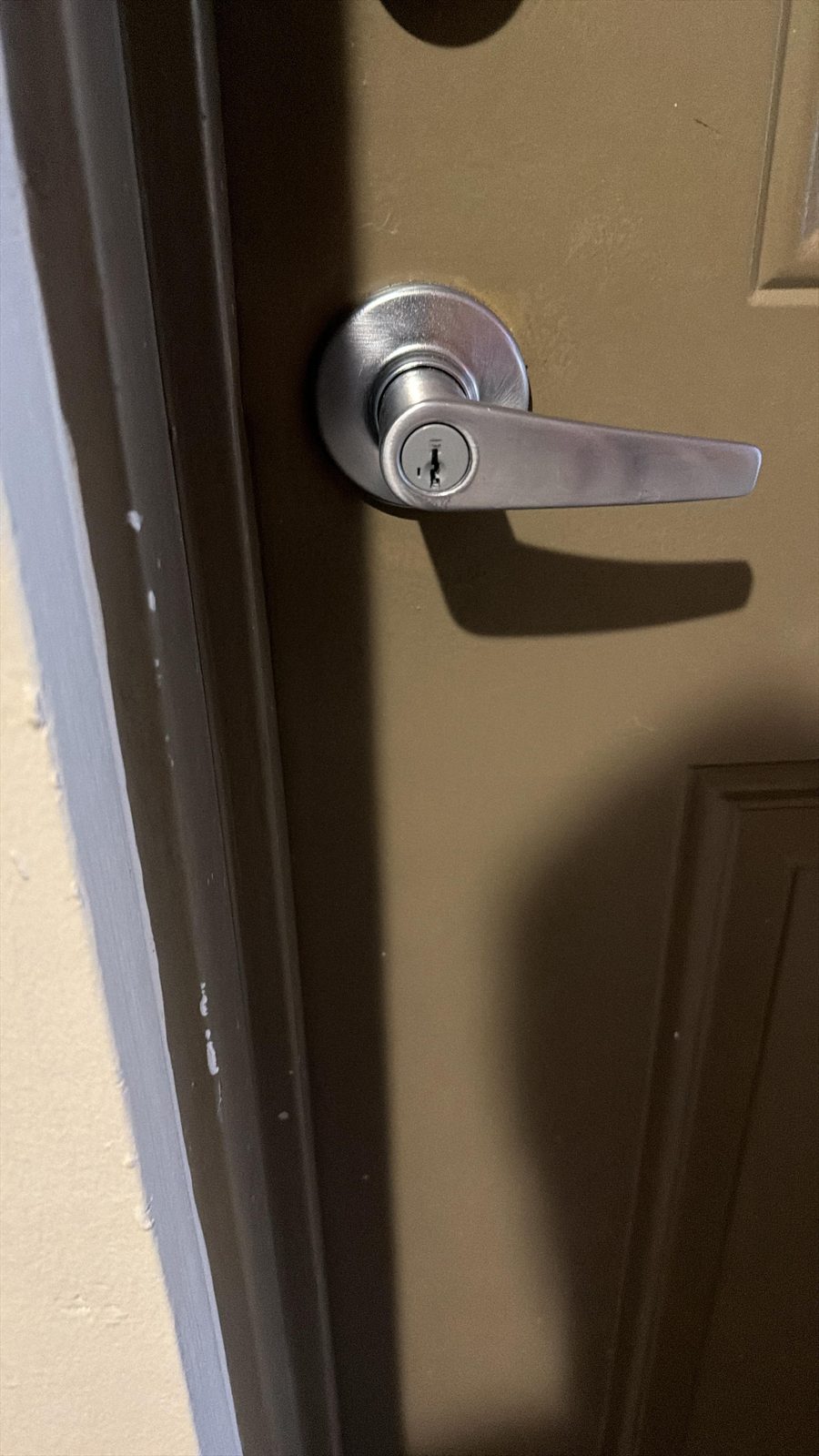
How to replace a door knob: identify the hardware first
Start by deciding what the existing knob does. A passage knob turns freely and is commonly used on a door that does not need to lock. A privacy knob has a lock for a room such as a bathroom or bedroom. An entry knob has a keyed exterior and a locking function. Match the replacement to the way you use the door, not just its appearance.
Look at both sides of the door and note how the current set attaches. Some knobs have visible screws; others use a cover plate that hides the screws. Check the latch edge of the door as well. The latch faceplate, its shape, and the way it sits in the door edge all help you determine whether a new latch can fit the existing preparation.
Also consider whether the door is part of an entry route, a shared building, or a rented home. If you do not own the property or have authority to change its hardware, get permission before removing the knob. For a door that needs dependable security, a damaged frame, or unfamiliar hardware, arrange help rather than experimenting with the lock.
Choose the replacement that fits the door and its purpose
A replacement knob should do the same job as the existing one unless you have a clear reason to change its function. A new finish alone does not make a knob compatible: the latch, door preparation, and locking style need to work together.
Passage knob
Choose this for an interior door that does not need to lock, such as a closet or hallway door. Confirm that the new latch suits the existing door preparation and closes smoothly.
Privacy knob
Use this where a simple interior privacy lock is needed. Check how the lock operates from both sides and make sure any emergency release method matches the hardware instructions.
Keyed entry knob
This option is intended for a door that needs a keyed lock at the exterior. Confirm that the latch and strike align, and consider how the knob will work with any separate deadbolt already on the door.
Keep or change the existing function
Replacing a worn knob with the same type is usually the most straightforward choice. Changing from a passage knob to a locking type, or the reverse, can require different hardware and careful attention to the door and frame.
Gather the tools and check compatibility before removing anything
Read the replacement product’s instructions before starting. Compare its parts with the existing knob while the old hardware is still in place. If the new set clearly requires different holes, a different latch arrangement, or work you are not comfortable doing, pause and choose a compatible set or ask a locksmith.
- Basic tools — Have a screwdriver that fits the mounting screws, a tape measure, and a flashlight ready. Use a hand screwdriver rather than forcing screws with a tool that could strip the heads or damage the door.
- Replacement parts — Check that the package includes the two knobs or levers, the latch, mounting screws, and any strike plate or other parts listed in its instructions. Do not assume the old latch will work with a different knob set.
- Measurements to compare — Measure the door thickness and the distance from the door edge to the center of the knob hole. Compare those measurements with the product’s stated fit. Check the latch length and faceplate shape against the existing opening.
- A safe work setup — Keep the door open while you work so it cannot latch shut with the hardware partly removed. Place the screws and small parts in a container, and keep the work area clear of children and pets.
Install the new knob in eight careful steps
Follow the instructions supplied with the exact knob set. Hardware differs, so use the product’s diagrams for the direction and order of parts. Work with the door open, and do not force a part that resists.
- Keep the door open — Make sure the door cannot swing shut while the knob is off. Check that you can reach both sides and the door edge without stretching or balancing tools in an unsafe position.
- Find the fasteners — Look for mounting screws on the inside knob. If a trim cover hides them, remove that cover only as the manufacturer directs. Check that you have found the actual fasteners before prying or twisting any part.
- Remove the old knobs — Support each side of the knob as you loosen the screws, then pull the two sides away from the door. Keep the spindle and other small parts together. Check for damage around the hole or signs that the mounting screws have been stripped.
- Remove the old latch — Unscrew the latch faceplate from the narrow edge of the door and slide the latch out. Note which way the angled side of the latch faces. Check whether the new latch matches the opening and the door’s edge preparation.
- Fit the new latch — Insert the replacement latch in the orientation shown in its instructions. Attach the faceplate without overtightening the screws. Check that the latch sits flat and moves freely when pressed.
- Position the knob sides — Place the exterior and interior pieces through the latch mechanism as directed. Make sure the spindle or connecting parts engage the latch instead of sitting beside it. Check that the knobs are level and sit flush against the door.
- Tighten and align the hardware — Install the mounting screws and tighten them gradually, alternating sides if the design calls for it. Stop when the knob is secure; overtightening can bind the mechanism. Check that both sides turn without scraping or wobbling.
- Test before closing the door — Turn each knob and confirm that the latch retracts and returns smoothly. If the set locks, test the lock with the door open and follow the manufacturer’s instructions. Only close the door after the latch and lock work consistently.
Check the latch, strike, and lock before using the door
With the door open, turn the knob several times and watch the latch. It should retract when you turn the knob and extend again when you release it. For a keyed or privacy set, test the locking action from the appropriate sides while the door is still open. A key or lock that sticks at this stage is a reason to stop and inspect the installation.
Next, move the door toward the frame slowly. Watch whether the latch meets the opening in the strike plate without hitting the edge of the plate or frame. If it does not line up, do not slam the door or force the knob. Recheck that the latch is installed in the correct direction and that the hardware sits straight.
After the door closes smoothly, check the knob for looseness and repeat the lock test. If the door only latches when lifted, pushed, or pulled hard, the issue may involve alignment or the door itself rather than the knob alone. A replacement knob will not correct a sagging door, damaged frame, or worn strike.
Know what can go wrong and how to respond
Small installation problems can make a new knob feel worse than the old one. Check the simplest fit and alignment issues first, but do not keep tightening, bending, or forcing parts to make them work.
- The knob turns but the latch does not move — The spindle or connecting parts may not be engaged with the latch. Reopen the door, remove the knob as instructed, and check how the parts line up. If they still do not engage, the set may not suit the existing latch.
- The knob feels stiff after tightening — The mounting screws may be too tight, or the two sides may not be aligned. Loosen the screws slightly and reseat the hardware, then test the knob with the door open. Stop if the parts bind or the screws will not hold.
- The latch will not sit flush — The latch faceplate may not match the door edge, or the replacement latch may be the wrong style for the opening. Do not carve or enlarge the door unless you know the required preparation and can do that work safely.
- The latch misses the strike — Check the latch direction and whether the knob is mounted straight. If those are correct, the door or frame may be out of alignment. Forcing the latch can damage the new hardware or leave the door unable to close securely.
- The lock works only sometimes — Test it again with the door open. If it works open but binds when closed, the latch and strike may be misaligned. If it binds in both positions, remove the hardware only if you can safely follow the product instructions; otherwise, stop and get help.
Call a locksmith when the fit or security is uncertain
Stop the DIY job if the door is part of a required exit, the frame or door is damaged, screws spin without gripping, the latch does not retract reliably, or the new hardware does not match the existing preparation. A keyed entry door deserves particular care: do not rely on it until the key and latch both work consistently.
A locksmith can assess whether the problem calls for a compatible knob, a lock change, or attention to the door and frame. Locksmith Xpress provides mobile service in Gaithersburg and throughout Montgomery County, so the work can be done at your home or business. Review our lock change & installation service if you need help choosing or fitting door hardware.
If you are in the area and need a mobile locksmith, you can learn more about our locksmith in Gaithersburg service or contact us. We are open Monday to Sunday, 8:00 AM to 8:00 PM. There is no storefront to visit.
Keep the new knob working smoothly after installation
Use the knob normally for the first few days and notice whether it loosens, sticks, or needs extra pressure. Check the mounting screws and the latch action if the knob starts to wobble. Make only small adjustments that the product instructions support; do not compensate for a poor fit by overtightening the hardware.
Keep the product instructions and any extra parts in a safe place. If you later need a replacement part, the product information can help identify the correct component. For a door that has a separate deadbolt, test that lock independently too. Replacing a knob does not replace or repair a separate lock.
If your real concern is who can use the existing key, changing the knob may not address it. A locksmith can explain whether the hardware needs a different approach. For more on the separate option, see our guide to how to rekey locks.
Frequently asked questions
Can I replace a door knob without changing the latch?
Sometimes, but the new knob must be compatible with the existing latch and its connection. Check the replacement instructions and compare the parts before removing the old hardware. If the parts do not fit or the knob does not move the latch smoothly, do not force them together.
Will a new door knob fit the holes already in my door?
It depends on the door’s thickness, the distance from the edge to the knob hole, and the latch preparation. Compare those measurements with the replacement product’s fit information before buying. If the openings do not match, choose compatible hardware or ask a locksmith to assess the door.
Should I replace a knob if I only want to change who has a key?
Replacing a keyed knob gives you new hardware, but it may not be the only way to address key access. A locksmith can assess whether rekeying or replacing the lock better fits the existing setup. Do not assume a knob change also changes a separate deadbolt.
What should I do if my new door knob will not latch?
Keep the door open and check that the latch faces the right direction, the knob is aligned, and the latch moves freely. Do not slam the door or rely on a lock that does not operate consistently. If the latch still misses the strike or binds, stop and have the hardware and door alignment checked.
Need help with a door knob or lock?
Locksmith Xpress provides mobile lock change and installation service in Gaithersburg and across Montgomery County.